
Buena Vista Social Club (1999) Oscar Nominee, directed by Wim Wenders and Ulrich Felsberg. 105 minutes.
A Cinematic Portrait of Cuban Music – Buena Vista Social Club stands as a cinematic tribute to Cuba’s musical heritage, vividly portrayed through the performances and personal stories of its people.
Afro-Cuban Jazz
The Buena Vista Social Club documentary masterfully captures the spirit of Cuba through its music and the lively people who perform it. Directed by Wim Wenders, the film highlights the beauty of classic Cuban music, known as “Son” or “Cuban soul,” along with the singers and musicians who have influenced it. This genre features a distinct Afro-Cuban Jazz influence, and the documentary offers viewers a look at Cuba at the turn of the century—a place where much of daily life seems unchanged since the late 1950s.
Parallel Themes and Storytelling
The film weaves multiple themes together, creating a narrative that is both heartfelt and entertaining. It combines scenes from a concert in Amsterdam, interviews with the musicians set against the backdrop of Havana and other Cuban locations, and recording sessions at Egren Studios in Havana. These elements are smoothly integrated, culminating in the musicians’ visit to New York City, where they perform their final concert at Carnegie Hall. For many of the performers, this visit and performance represent the fulfillment of a lifelong dream.
Visual Contrasts and Establishing Roots
In the film’s opening, Compay Segundo—a renowned musician—returns to the neighborhood where the original club once stood. These scenes are intercut with the Amsterdam concert, highlighting the music’s roots and its musicians. The bright Cuban colors of Havana sharply contrast with the concert hall’s muted tones, creating a montage that brings the streets and neighborhoods of Havana into the concert hall.
Havana’s Timelessness and Musical Heritage
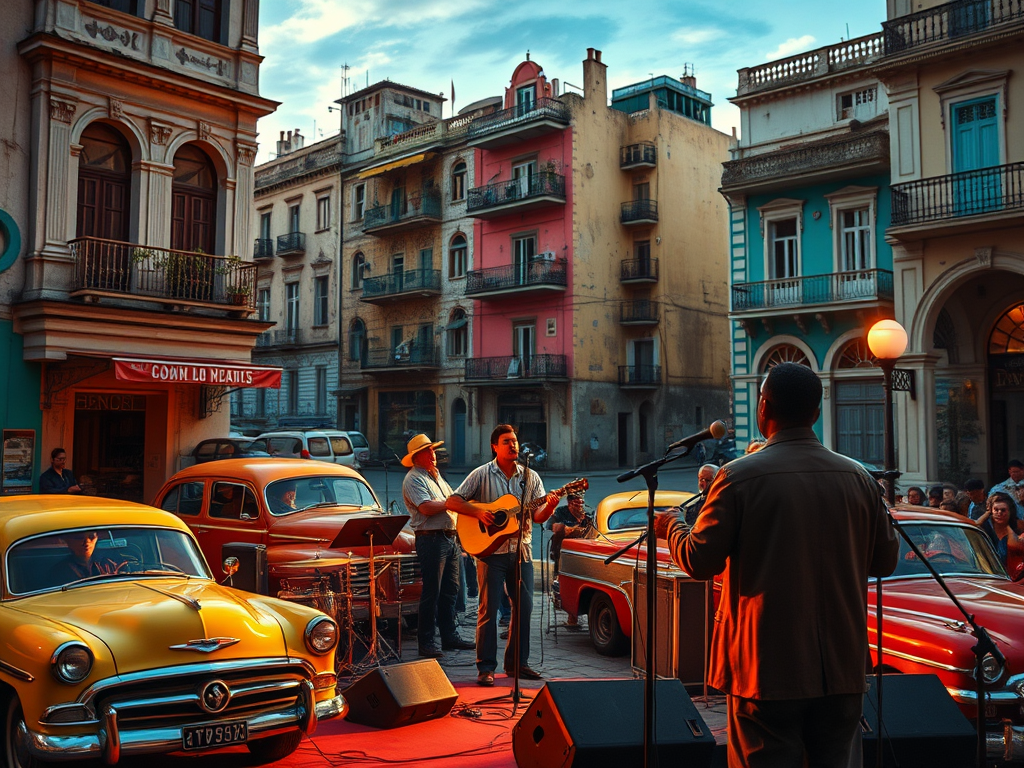
Early scenes showing Havana in 1998 evoke the feeling of walking through a 1950s car museum, with vintage cars and faded buildings. However, the roots of the music go deeper than the architecture. Each musician interview pulls the audience closer to understanding the “son” of Cuban music, and many performers are shown both on stage and in their Cuban surroundings. Jorg Widmer’s cinematography, including Steadicam work, is especially noteworthy.
Performances and Musical Narration
A memorable moment occurs when Ibrahim Ferrer, at age 70, performs with Omara Portuondo in Havana’s recording studio. The film alternates between this studio scene and the same song performed in Amsterdam, shifting back and forth between locations several times before moving on to another interview or Cuban setting. The story is mainly conveyed through music and first-person interviews with the musicians, rather than a third-party voice-over. Although adding graphics to identify each musician would have improved clarity, the film does list the performers at both the beginning and end.
Origins and Impact of the Documentary
The documentary was inspired by the success of the Buena Vista Social Club CD, produced by Ry Cooder for Nick Gold and World Circuit Records. Ry Cooder, known for working with artists like Captain Beefheart, Johnny Cash, and the Rolling Stones, considers the Buena Vista Social Club CD his best work. Recordings made in Cuba were later produced in Los Angeles, and the CD earned a Grammy, received worldwide acclaim, and sold millions of copies.
Musical Instruments and Notable Musicians
An especially interesting segment features Barbaro Alberto Torres Delgado, also known as “Barbarito” Torres, who plays the Cuban Laud. This stringed instrument, originally brought to Spain by the Moors and later developed in Cuba, adds a distinctive sound to both traditional and modern Cuban music.
Carnegie Hall Finale
The Carnegie Hall concert is a highlight, with all performers delivering outstanding performances. Ruben Gonzalez, a 90-year-old pianist, is featured playing piano in scenes intercut with the musicians touring New York City. The music continues as the musicians explore the city, offering viewers a sense of discovery filtered through the artists’ experiences.
Ensemble Cast Over twenty musicians and singers participate in both concerts, including Compay Segundo, Omara Portuondo, Pio Leyva, Eliades Ochou, Ibrahim Ferrer, Joachim Cooder, and Ry Cooder, among others.
Excerpt: Documentary Storytelling – Reflection and Review by James R Martin – (Release Date December 2025 -January 2026)
Trailer Buena Vista Social Club